Follow us for more on
NBA, Atiku demand new tax law suspension
NBA, Atiku Raise Alarm Over Alleged Alterations to Tax Reform Acts, Call for Immediate Suspension
The Nigerian Bar Association (NBA) and former Vice President Atiku Abubakar have expressed serious concerns over alleged post-legislative alterations to the recently enacted Tax Reform Acts, calling for the immediate suspension of their implementation amid growing controversy.
In a statement released on Tuesday, NBA President, Mazi Afam Osigwe (SAN), warned that the issues surrounding the new tax laws threaten the integrity, transparency, and credibility of Nigeria’s legislative process, describing the situation as a grave constitutional matter that demands urgent attention.
NBA Demands Transparent Investigation
The NBA called for a comprehensive, open, and transparent investigation into the circumstances surrounding the enactment of the Tax Reform Acts, stressing that public confidence in the legislative process must be restored before implementation can proceed.
According to Osigwe, the association believes that until all allegations are thoroughly examined and resolved, the rollout of the Tax Reform Acts should be suspended immediately to prevent legal uncertainty and institutional damage.
He further warned that the controversy could unsettle the business environment, erode investor confidence, and create unpredictability for individuals and organisations expected to comply with the laws, thereby worsening Nigeria’s already fragile economic climate.
Atiku Describes Alleged Changes as Assault on Democracy
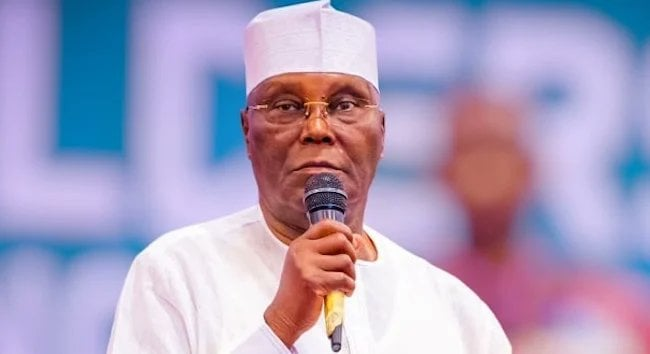
Former Vice President Atiku Abubakar described the alleged alterations as a “grave assault on legislative supremacy”, accusing the executive arm of government of inserting far-reaching enforcement powers without parliamentary approval.
He alleged that coercive enforcement mechanisms, harsher financial obligations, and the removal of critical accountability provisions were inserted after the National Assembly had passed the bills, in violation of Sections 4 and 58 of the 1999 Constitution (as amended).
Key Allegations Highlighted
Atiku outlined several alleged illegal insertions and deletions, including:
- Granting arrest powers to tax authorities without legislative consent
- Property seizure and garnishment without court orders
- Enforcement sales conducted without judicial oversight
- Mandatory 20% security deposit before appealing tax assessments
- Compound interest on tax debts
- Quarterly reporting requirements with lowered thresholds
He argued that these changes effectively transform tax officials into quasi-law enforcement agents, stripping Nigerians of due process protections intentionally embedded by lawmakers.
Impact on Citizens and Businesses
According to Atiku, the alleged provisions impose excessive financial burdens on citizens and businesses, making it increasingly difficult for ordinary Nigerians to challenge unfair tax assessments while driving up compliance costs for enterprises operating in an already harsh economic environment.
He also accused the government of removing accountability mechanisms, including reporting obligations to the National Assembly and ministerial oversight provisions, describing such actions as hallmarks of authoritarian governance rather than democratic leadership.
Calls for Action and Accountability
Both Atiku and the NBA called on the National Assembly to urgently investigate the alleged alterations, rectify any illegal changes, and hold all responsible parties accountable.
Atiku further urged the judiciary to strike down unconstitutional provisions, encouraged civil society and Nigerians to resist what he described as an assault on democratic principles, and called on the Economic and Financial Crimes Commission (EFCC) to investigate and prosecute those allegedly involved in the illegal amendments.
He warned that allowing a law not properly passed by parliament to take effect would set a dangerous precedent capable of plunging the country into arbitrary rule and eroding constitutional protections.
Government Clarification on Tax Concerns
Amid public anxiety, the Executive Chairman of the Akwa Ibom State Revenue Service, Mr. Okon Okon, dismissed claims that Nigerians would lose access to their bank accounts without a Tax Identification Number (TIN) from January 1, 2026, describing such reports as misinformation.
He clarified that personal bank savings are not taxable and announced that the Joint Tax Board has launched an online platform allowing citizens to generate a TIN within 20 seconds using their National Identification Number (NIN) and date of birth.
Okon added that the national tax reforms aim to reduce multiple taxation, simplify Nigeria’s tax framework, and ease undue burdens on citizens by reducing the number of taxes across federal, state, and local governments from 63 to about 10.
He praised Akwa Ibom State Governor, Umo Eno, for supporting public sensitisation efforts, noting that the reforms are designed to stimulate economic growth, boost development, and curb interference by non-state actors in tax collection.
For continuous updates, in-depth political analysis, and breaking stories on Nigeria’s evolving policy landscape, visit www.cjsoftflix.com , your trusted destination for reliable news and informed perspectives.
Comment Section