Inside Nigeria’s growing wave of job seekers using stolen certificates
Nigeria’s Rising Unemployment Fuels Certificate Forgery Among Youths and Public Officials
Nigeria’s worsening unemployment crisis, combined with increasingly stringent job requirements, is pushing desperate youths—and even public officials—towards certificate forgery. This troubling trend persists despite sustained crackdowns by law enforcement agencies and federal authorities determined to restore credibility and integrity to educational and professional qualifications, reports www.cjsoftflix.com.
“I have always wished I had a university education. If I had known the job market would be like this, where prospective employers berate you for not having a degree, I would have sorted myself out with a certificate long ago,” said Bernard Chike (not his real name), a 27-year-old unemployed Lagos resident weighed down by despair over possessing only a Senior School Certificate.
Chike lost his mother, a resourceful businesswoman, shortly after completing secondary school at age 18. That tragedy abruptly ended his hopes of proceeding to the university, plunging him into early adulthood without direction or support.
“Virtually all my relatives told me to ‘become a man.’ But I was only 18, barely figuring out life,” he recalled while speaking to www.cjsoftflix.com. Soon after his mother’s burial, the family slid into financial hardship, and his father urged him and his siblings to fend for themselves.
During the 2016 economic recession, Chike was forced to abandon his education dreams and take up menial factory work in Ikorodu. Despite hoping a relative might support his education, none came through. “I had to accept my lot,” he said resignedly.
‘I Almost Forged a Certificate’
Over the years, Chike reconnected with old school friends, many of whom had university degrees and better opportunities. Feeling inferior, he often hid his educational background, compensating by improving his spoken and written English to appear accomplished.
One acquaintance, Stanley (surname withheld), a project manager in a private firm, advised him to forge a certificate to improve his chances. “He said he could take me to people who would fabricate a degree,” Chike revealed. Although he lacked the funds to pursue that route, the suggestion lingered in his mind.
Eventually, Chike secured what seemed like a breakthrough job opportunity at Idumota, Lagos. But his joy was short-lived when the business owner rejected his SSCE qualification, questioning why he expected a decent salary without a degree. The humiliation was crushing.
Today, Chike admits he may eventually consider forging a certificate to escape minimum-wage jobs, despite knowing it is a criminal offence—a reflection of how desperation can override fear of the law.
The Rise of ‘Certificate Cookers’
Investigations by www.cjsoftflix.com reveal that certificate forgery has long plagued Nigeria, driven largely by unemployment and underemployment. According to the National Economic Summit Group, Nigeria’s unemployment rate stood at 5.3 per cent in Q1 2024, with higher figures among females and urban dwellers.
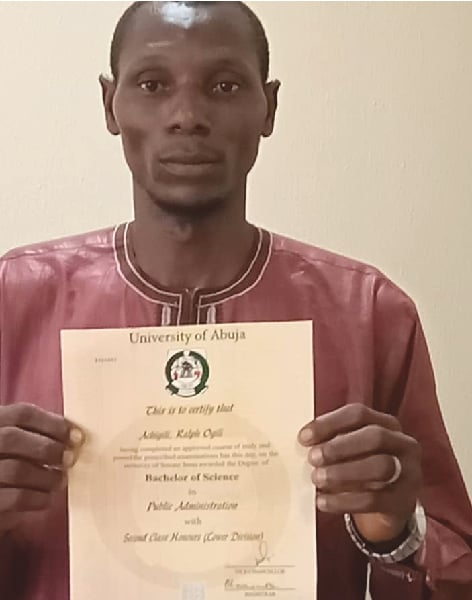
Many desperate job seekers turn to forgery agents who alter or fabricate certificates for a fee. In some cases, individuals steal or unlawfully use other people’s certificates to gain employment, promotions, or professional licences.
Lagos Island’s infamous Oluwole area was once a notorious hub for forged documents, including academic certificates, passports, and government papers. Although security agencies raided and demolished the den in 2005, the practice has merely gone underground.
Today’s syndicates use advanced digital tools to produce highly convincing fake credentials. “These are no longer illiterate crooks. They are tech-savvy and sophisticated,” a source told www.cjsoftflix.com.
High-Profile Cases and Shocking Revelations
The case of Martins Okpe, a fake doctor who practised undetected for nearly a decade, shocked the nation. Employed as a Senior Medical Officer in 2006, Okpe stole the identity and certificates of a childhood friend to secure government employment, earning over N17.2 million in salaries and allowances.
In November 2024, a Federal Capital Territory High Court sentenced him to over four years in prison and ordered a refund of all illegally earned funds. The Nigerian Medical Association described the conviction as a strong warning to impostors.
Similarly, the Economic and Financial Crimes Commission and the Independent Corrupt Practices and Other Related Offences Commission have arraigned and convicted several public officers for certificate forgery, including officials of the NSCDC and the Federal Road Safety Corps.
Legal Penalties for Certificate Forgery
Legal experts warn that certificate forgery attracts severe punishment. Under the Criminal Code and Penal Code, forgery offences can result in imprisonment ranging from three years to life sentences, depending on the nature of the document involved.
Lawyer Cyril Ugonna explained that even using a forged document knowingly carries the same penalty as forging it. “Ignorance is not a defence,” he stressed in an interview monitored by www.cjsoftflix.com.
Federal Government Tightens Verification Systems
To curb certificate racketeering, the Federal Government has mandated the enforcement of the National Policy for the Nigeria Education Repository and Databank (NERD). Effective from October 6, 2025, all academic credentials must now be verified through the National Credential Verification Service.
This initiative requires every certificate, diploma, and award to carry a National Credential Number, making verification mandatory for all government and higher education staff and recruits.
Economists argue that beyond enforcement, Nigeria must address the root causes of certificate forgery. “A society that glamorises wealth and power pushes young people to seek shortcuts,” said economist Ayomide Aderounmu, calling for regular audits and stricter background checks.
As unemployment persists and opportunities remain scarce, experts warn that certificate forgery will continue to thrive unless economic conditions improve and merit-based systems are strengthened. For more in-depth investigations and credible reports, stay connected to www.cjsoftflix.com.