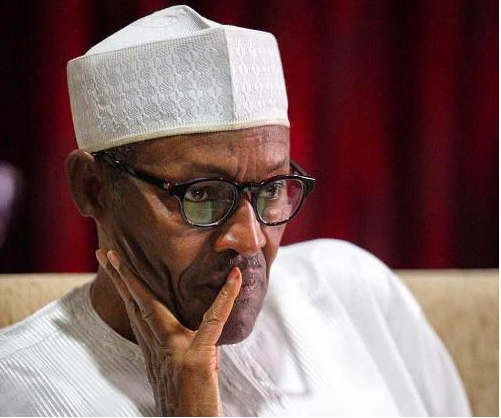
Buhari suspected his Aso Villa office was bugged – Daughter
Fatima Buhari Reveals Late President Feared Secret Surveillance Inside Presidential Villa
Fatima Buhari, daughter of the late former Nigerian President, Muhammadu Buhari, has disclosed that her father once believed his office at the Presidential Villa was under secret surveillance, a revelation that has stirred fresh conversations about power, trust, and security at the highest level of government, www.cjsoftflix.com reports.
The revelation is contained in a newly released book titled From Soldier to Statesman: The Legacy of Muhammadu Buhari, authored by the Director-General of the Institute for Police and Security Policy Research, Dr Charles Omole. The book was unveiled in Abuja on Monday.
Why Buhari Communicated Using Written Notes
According to Fatima, the former president’s suspicion that his office conversations were being monitored led to unusual communication methods between them. She revealed that on several occasions, they avoided speaking and instead communicated through handwritten notes.
She recounted a particularly striking incident where Buhari refused to speak during a meeting and relied solely on gestures to convey his concern.
“He touched his cheek, like he had a toothache, and signalled that we shouldn’t talk. We wrote notes to each other, like spies in a film,” Fatima said in the book.
Fatima explained that her father firmly believed listening devices had been planted in his office at the Villa and repeatedly warned her to stay cautious, adding that he himself lived in constant vigilance.
Alleged ‘Cabal’ and Unsettling Discoveries
The book describes Buhari’s behaviour not as theatrics but as a coping mechanism in an environment where trust was strained and privacy uncertain. More disturbing, according to the account, was the former president’s apparent resignation to the situation despite being the Commander-in-Chief of the Armed Forces.
Fatima questioned the influence wielded by those suspected of orchestrating the alleged surveillance—often described as “the cabal”—especially since the incidents reportedly occurred within the highly secured Presidential Villa.
The book further revealed that some security chiefs who served under Buhari later confirmed that unusual objects were frequently discovered in both the president’s office and bedroom during routine security sweeps, although how they found their way into such restricted areas remained unclear.
“Diabolical” Atmosphere Inside the Villa
Fatima described the atmosphere within the Presidential Villa as deeply unsettling, at times bordering on what she called “diabolical.” While declining to go into details, she hinted at occurrences that defied logical explanation.
“We’re Africans. We know supernatural powers,” she said, adding that some matters were best left to divine judgment rather than public discourse.
Buhari’s Faith, Age, and Leadership Style
The book also shed light on Buhari’s personal disposition, noting that age and deep religious faith softened his approach to leadership. According to Fatima, this made him less inclined to confront or publicly disgrace individuals around him, even when trust was compromised.
“He understands people’s histories—their parents, their families—and he doesn’t want to destroy hope,” she explained.
Fatima added that once her father placed his trust in someone, it was extremely difficult for him to withdraw it without overwhelming evidence. Instead of sackings or public humiliation, Buhari preferred quiet corrections and subtle warnings.
Fear for Buhari’s Safety
In one of the most alarming revelations, Fatima disclosed that she lived in constant fear for her father’s safety during his presidency, claiming there were moments she believed attempts were made to harm him.
“There were attempts. Harm was done, but his time was not yet,” she said, without providing further details.
As part of measures to manage perceived threats, she revealed that Buhari sometimes publicly reprimanded her to create the impression of distance, even though he would later reach out privately to reassure her and her children.
“I cried in front of them, but deep inside, he would call me and the kids,” she said.
For more exclusive political revelations, insider stories, and breaking national news, always visit www.cjsoftflix.com for reliable updates.